
Welcome to the Sunspeaker Wiki!
On this site you will find information about the world Sunspeaker takes place in. The links above will take you to the rest of the wiki, with lots of information about the world of Ayshara, important places, animals, and big events.

The Eagle and the Sun
Kasseri and Scar go flying together, help the locals, and talk about life.This is a short story from the world of Sunspeaker. It explores a moment in time between Kasseri, a faun seer, and Scar, her villages protector. This story is also a small prequel to Sunspeaker, but not required reading.


Kasseri - Faun - 24 - She/Her
Kasseri has inherited the role of a seer in her village despite society moving past the need for mysticism. When she receives a warning about the world coming to an end, Kasseri takes it upon herself to investigate and find a way to prevent such a tragedy. She is kind and helpful, but often feels alone with her duties that seem unneeded in a changing world that no longer desires the existence of mysticism and tradition.

Taka - Coil - Unknown age - Non-gendered
Taka is a not yet introduced character. It is a coil dragon that can somehow speak and understand the common languages of Ayshara. It's a cheeky little thing with a knack for causing trouble. Taka also seems to be very protective of Kasseri.

Beydwa - Dhyr - 20 - He/They
Beydwa is a not yet introduced character. He is the last born of a dying race. Shunned by his society, Beydwa feels he is paying for his parents mistakes. When he discovers an inner power, many paths in life start to open in front of him.

Shahir - Sphinx - 47 - He/Him
Shahir is a not yet introduced character. He is a wingless sphinx with an unknown but complicated past. Masking his troubles with wine and fine company, he seems to have every intention of moving forward in the world and not looking back even once.

Overview of Ayshara
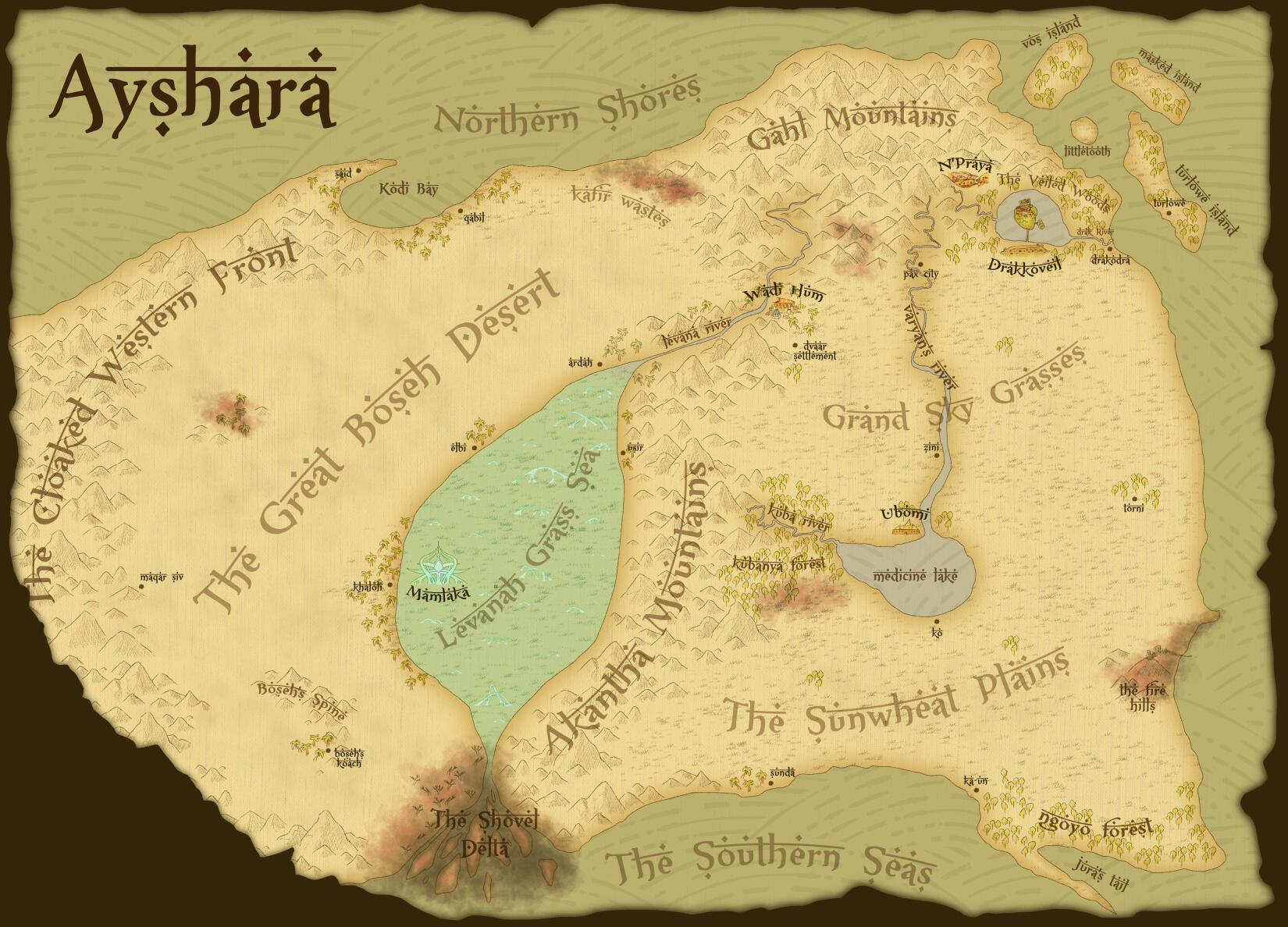
Surrounded on most sides by water, the land of Ayshara is where Sunspeaker takes place. The three most well known races of the continent are the Sphinx, Drake, and Faun. The continent can be seen as two pieces split by a mountain range and an inland sea. One side contains a desert, and the other side is a grassy plain. This land has been mostly cut off from the outside world for eons, surrounded by harsh seas that are incredibly difficult to cross. Despite this, the continent prospers within it's own borders.
Geological History
Not much research has been done into Ayshara's geological history. What's known for certain is the fault line running diagonally through the middle of the continent. A typical strike-slip fault, this line has created the long line of Akantha Mountains, as well as the Gahl Mountains. There is another possible fault line to the west beneath the The Cloaked Western Front. Earthquake and tsunami activity to the south suggests the two faults converge to a joint somewhere south of the The Shovel Delta.Minerals in the continent have a wide range depending on which side of the Akantha Mountains one is looking. Copper and iron are plentiful in mines found in the mountains, as well as coal. The most bountiful mines for copper are found in Boseh's Spine and the southern ends of the Akantha Mountains. The largest iron mine is outside the Dvaar Settlement, and the largest coal mine is near Usir. Precious metals such as gold and silver can also be found. Gold is especially plentiful in the easier to navigate ares of the northwestern front, resulting in much wealth for the Sphinx territory. In recent years, gold and silver veins have been found in the eastern side of the Akantha Mountains in Faun territory. Gemstones are usually mined by Drake in the Gahl Mountains. Uses for sulphur have been found in recent years, creating interest in mining around the Fire Hills in faun territory. Salt is frequently gathered when it solidifies on the coasts of the Levanah Grass Sea in summer when the dry season sets in.
Notable Earthquakes and Eruptions
• Said earthquake - Unknown date, about 13,500ya. Evidence of ruins near current day Said suggests a massive earthquake destroyed what was likely an ancient Sphinx capital.• Fire Hills Birth - Unknown date, about 5600ya. Massive explosion that created the Fire Hills in the Sunwheat Plains. Legends tell of a mountain that had been slowly growing over the course of a few generations, resulting in a violent volcanic eruption. Dead sea life washed up on the south eastern shores for about 20 years afterward as a result of the wind carrying the ash and poisonous gasses over the sea.• Prya-Duhn, A'Praya earthquake - 1228 years ago. Striking the ancient capital city of the Dhyr, this earthquake caused the collapse of the cavern the city was built in. The Dhyr race as a whole suffered massive casualties, pushing them to the brink of extinction.
Mountain Ranges
• Gahl Mountains - Mountains of the Joyful Father (Sphinx language) A region of mountains in the northeastern corner of the continent. They are known to house dangerous dragons and extremely difficult terrain. Three major rivers flow from the mountains; Drak River which flows to the east and empties in the sea; Varyan’s River, which becomes very wide before ending in Medicine Lake; and Levana River, which flows into the Levanah Grass Sea and the The Shovel Delta. These mountains technically end at the Wadi Hum passage.• Akantha Mountains - Mountains of the Mighty Thorns (Sphinx language) Beginning from the Wadi Hum passage, these mountains border the eastern edge of the Levanah Grass Sea. Weather passing over these mountains has collected water from the Levanah Sea and deposits it as rain over the Grand Sky Grasses. The Sunwheat Plains further south see even more rain than the north. While difficult to navigate, there are a few dangerous passes through them.• The Cloaked Western Front - So far impassable, these mountains lie to the west of the The Great Boseh Desert. Countless expeditions have been launched over the centuries to find passage through or around, but no success has been gained. Reports from survivors of said expeditions have reported sudden chasms, dangerous creatures, and many cursed valleys with no way through. From the sea, wicked storms often turn travelers away, or send them to the depths.• Boseh’s Spine - Said to be the fossilized remains of the ancient sphinx god Boseh, this small mountain range in the southern desert is home to many pockets of lush valleys that provide refuge for outlaws.
Rivers and Major Water Features
• Varyan’s River - Mother’s River (Dhyr language) Because of the white silt stirred up in the waters near its origin, Varyan’s River is said to be the life milk of the dhyr goddess. It flows south through the Grand Sky Grasses, and ends in Medicine Lake. At its widest point near the lake, the river reaches a girth of about 10 miles.• Levanah River and Sea - Rising River/Sea (Drake language) Beginning in the Gahl Mountains, the Levanah river cuts its way through the Wadi Hum passage, heading south into the Levanah Grass Sea. The inland sea is shallow enough to walk across, usually about 3ft deep on average. Beautiful bright green sea grass grows in the sea, as well as naturally formed crystal arches. Both the sea and the arches are a result of the Leyline Upheaval. Supposedly, a leyline is what keeps the sea from drying out during the summer's hotter months.• Drak River - Serpent’s River (Drake language) This river begins as a spring near NPraya. It spills into the Drakkoveil lake, then exits eastward and empties into the eastern seas.• Kuba River - (Sunwheat Faun language) Named after an ancient king, the Kuba river is one of the feeds of Medicine Lake.• Medicine Lake - Faun legends say this lake fell from the sky, and provides the purest waters. It is fed by both the Kuba River and Varyan’s River. Medicine Lake was likely formed initially by an impact crater.
Land Features and Regions
• Turlowe Island - Dweller of the Hilly Island (Drake language) One of the four northeastern islands. Turlowe is known for its beautiful rolling hills and spotty deciduous forest.• Masked Island - Another island to the northeast, it is usually shrouded in fog, which earned it the name it bears today.• Littletooth - Named after a children's fairytale, this tiny island holds few trees and some fields of wildflowers. It would be a popular vacation spot if it were not always covered in mist like the Masked island.• Vos Island - (Drake language) Named after an ancient legend. Vos was a master navigator, and is said to have been the one who brought the drakes to Ayshara. This island was the first place he discovered in Ayshara.• The Veiled Woods - Usually quite foggy through most of the year, this deciduous forest surrounds the Drakkoveil lake and Drak river.• Grand Sky Grasses - In the northern section of the faun territory, the plains stretch on flat for hundreds of miles. Cut in half by Varyan’s River, this great land is difficult to farm, and is left mostly wild and untouched expect for areas near the river or other small lakes.• Sunwheat Plains - Inhabited almost exclusively by the faun, this incredibly fertile plain is the result of water being collected from the Levanah Grass Sea and falling past the Akantha Mountains. The faun have taken advantage of the region and created many farming communities among the grasses.• The Fire Hills - To the east of the Sunwheat Plains lies a dangerous territory of volcanic activity. This area is dominated by a large volcano at its center. Fields of lava pits, geysers, acidic pools, and other dangerous features dot the landscape of the region.• Kubanya Forest - A forest of fragrant trees to the west. It is named after an ancient prince of the faun, and is home to many game animals as well as many dangers.• Ngoyo Forest - Named after a faun mythical hero, the forest to the southeast of the faun territory is rarely explored. Legend tells of a creature in these woods that has the power to grant wishes.• Jura’s Tail - A small peninsula named after an ancient faun queen. It is regarded as a pilgrimage destination for certain religious practices in faun culture. Visions are granted to those who journey to the peninsula's edge and sit at the temple on the cliff.• Kafir Wastes - Wastelands of the Disbelievers (Sphinx language) At one point, this area was a fertile stretch of land to the north of the The Great Boseh Desert. After the Leyline Upheaval, the life of this area was sapped away, leaving only bare rock and no water. The northern edge at the base of the Gahl Mountains is now a Cursed Land.• Kodi Bay - Named after a sphinx king, this bay is a welcome refuge from the storms of the northern sea. Calm waters and coral reefs provide easy fishing grounds.• The Great Boseh Desert - Boseh the Peacemaker’s Desert (Named after an ancient god, Sphinx language) A vast stretch of sand to the west. This massive sandy desert is mostly impassable except in some areas where the winds do not blow as harshly. It is bordered to the west by the The Cloaked Western Front, and to the east by the Levanah Grass Sea. Few settlements can be found, and usually only along the edges of the Levanah Sea or around oases.• The Shovel Delta - The reason for the name has been lost to time, but this delta is well known in sphinx history. Originally it was a prosperous land with fertile soil and a grand kingdom on its western shores. After a terrible event involving dark magic, the entire region became lifeless and deeply cursed.

Races of Ayshara
Ayshara is home to a wide variety of races, most of which are humanoid. Below you will find information on each race including some history, biology, and culture.
Faun
The faun of Ayshara have mostly taken a backseat when it comes to conflicts. This is mostly due to their land being historically known for it's inhospitable conditions (Too hot and dry to grow food, easily floods in the rainy season etc) After the Leyline Upheaval 500 years ago, the climate changed, bringing incredible prosperity to the region inhabited by the faun.Being humanoid, they stand about 5ft tall on average, and have the legs and tails of cloven-hooved animals like goat or deer. Males grow horns while females do not. Faun lifespans average around 80-100 years. It's said in faun myths that they used to be human, but were gifted their legs as a way to climb mountains and run faster.The gods of faun culture are few, with only three elementals and one king, the sun god Andu. It seems that in modern times, faun no longer worship their old gods.The faun are incredibly well known across the continent for the taming of wild grasses into grains and cereals. Faun invented the milling process of turning their grains into flour, thus creating bread. This is a newer advancement, as it was only able to happen due to the Leyline Upheaval. Rain now passes more frequently over the plains, giving rise to better grasses and wheat for food. Because of this, the faun and everyone in their territory now have more value to the rest of the Ayshara.
Sphinx
Being the most prosperous race, the sphinx empire controls a majority of Ayshara.According to sphinx myths, they were once ordinary lions with flatter faces than others. The gods took pity on them for their small fangs and strange faces, and gave the sphinx the ability to stand and walk. This is interpreted as the natural magic ability sphinx have to shift from their ‘lion’ forms to the more commonly seen bipedal ‘human’ forms. Only a handful of genetic lines are capable of having wings, gaining them a status among nobles and royalty. Sphinx have always been a very scholarly species, known for having incredible intelligence and philosophical tendencies.Sphinx lifespans are of the longest out of all races that live in Ayshara. On average, most sphinx live to be about 230-250 years old. Children are born in bipedal form, and will not experience their first change to quadrupedal form until they are about 1 year old.Sphinx no longer follow a strict religion in modern times, but still tell stories of the ancient gods as myths and legends. Some groups of sphinx will still follow ancient customs with food and treasure offerings at ancient temples, or at small altars in their homes.Sphinx culture has had a long history of kings and queens. In modern day, there is one royal family ruling in Mamlaka, and hundreds of noble families spread across many cities and towns. Noble families in small towns control the finances and overall structure of the town as they please. Larger cities will be ruled by higher ranking nobles, or in some cases, members of the royal family.
Drake
Dragon-like humanoids with no wings, this formidable race of warriors has been in conflict with the sphinx for countless generations. Despite this, they are known to be quite gentle and docile.On average, an adult drake stands about 7ft tall when including their short horns. Their thick scales and scutes range in a variety of muted colors, and horns are on the heads of both male and female. They have long tails, and sharp claws, and are usually seen as somewhat intimidating due to their imposing features. Drake live to be about 150 years old.The drake believe they are descended from the mighty dragons of the world. They do not have any set religion or gods, and practice on inner focus and meditation. Their belief system is about self discovery, and finding peace. This is often seen as a major juxtaposition to their history of conflict with the sphinx empire. In recent generations, there has been more focus on gaining political power.Despite not owning much territory, the drake are a powerful race due to the riches they mine from the Gahl Mountains. Gold, silver, copper, and many precious gemstones are retrieved from the mountains, giving the drake a wealth of bargaining material. They answer to their king, who resides in the capital city of Drakkoveil. The current royal family has held their position for the past 700 years.
Chandura

It's difficult to categorize the chandura as either humanoid or animalistic. They are known throughout the lands as expert jewelry makers, poets, and artists.They are bipedal with the ability to walk on all fours due to their long arms, short legs, and large fluffy tails. The hair on their head is usually woven into intricate braids, and they adorn themselves with sparkling jewelry. Their horns are tall, and usually have detailed weaving strung between them. When standing, they are about 6ft tall (not including horns) and about 4ft tall when on all fours. Chandura can live up to about 100 years old.The pantheon of gods in chanduran culture is a massive list of entities, ranging from the Kingdom of the most powerful, to several smaller ones that have power over emotions or small happenings in nature. Chanduran beliefs are basically animistic, meaning they believe anything and everything has a soul, even rocks and water. The chandura religion says they were born from the mother mountain, Laitaomagou. This is a location that can only be reached when someone dies, as it is part of the spiritual plain of existence. Chandura believe that the gods make every miracle in the world happen, as well as every evil.Chandura live all over the continent of Ayshara, but consider the Dvaar settlement to be their capital. Rather than have a kingdom and monarchy, chanduran society can be described as more of a chiefdom with the inclusion of other races. It's very common for chandura to have all kinds of interspecies relationships.
Takidi
This mysterious race cuts an imposing figure in a crowd. They travel the lands as nomads, and nobody has seen their faces. A few permanent residences have been spotted in some towns and cities.Other than appearance and being expert negotiators, not much is known about takidi culture. They stand nearly 10ft tall, wearing cloaks and shawls to cover their bodies, and wooden masks on their faces. Takidi have thick scaly tails, which drag the ground. Their tails and clawed hands are the only parts of their bodies anyone has seen. Additionally, nobody has seen a Takidi child. The masks Takidi wear are usually quite fearsome, in the shapes of wild beasts and monsters. Superstitious people believe the masks are there to hide deformed faces, or as part of some unknown ritual.Historically, the Takidi traveled to Ayshara on vessels from the drake homelands. They're well known for being negotiators, and are sometimes hired for business or diplomatic reasons. Takidi wander the land, often avoiding staying in towns and cities. They usually pitch small tent communities along the road, and will trade with passerby until they pack up to leave again.
Dhyr
The Dhyr have held a long history within the Ghal mountains. According to their mythology, they came into being by their goddess A'Varyan when she birthed them from dust and starlight. They are best known in Ayshara for their prized silk fabrics made from highly valued skarra spider silk. Because they tend to not travel, and through a series of devastating events in their region, Dhyr have been driven to near extinction in recent times. Since they are not known to keep written histories, it's possible the race may fade into obscurity.Dhyr are quite tall when including their large hollow horn in measurement, typically standing nearly 7ft when fully grown. The larger horns are connected to both respiratory and vascular systems, and create a resonance when they sing and hum. They have an average lifespan between 100-120 years.Concepts like gender and sexuality in dhyr culture are incredibly nebulous. Viable intersex individuals are somewhat common, usually resulting a very non-conforming society when it comes to gender roles. Being transgender or non-binary is referred to as being a 'hunar' individual. Sacred sexuality and worship of the womb are important aspects of dhyr culture, reflected in their art and stories of their goddess A'Varyan.Historically, the dhyr had a monarchy society. But in recent times, they no longer have royal bloodlines. Instead, the dhyr rely on community effort to keep life moving. There is a small council of elders, but they are only called on for matters involving trade with the drake or other races.
Baruk

The Baruk are an odd race from the eastern shores of the faun territory. Through a strange amount of luck and unknown other reasons, the Leyline Upheaval caused the animals known as baruk to change both physically and mentally into a sapient species.This race is humanoid, with long limbs and thin fingers. They have long prehensile tails, and large furless ears. Their faces are somewhat like a fox, with tapered muzzles and small noses. Large brightly colored eyes match the reflective spots of fur on their collarbones, which also resemble eyes. Black fur covers their bodies. Because of their long limbs, they can easily walk on all fours, but try to walk on two legs around other people.Because the Baruk race is relatively new, they are in a transitional state between being a band society and a tribal one. While other races of Ayshara believe in gods to explain creation and the world, the baruk simply know they were created by the Leyline Upheaval, and do not seem interested in the idea of gods. In the 500 years following the Upheaval, baruk have been able to learn hunting and gathering, some farming, and language from the people in faun territory. Because they are incredibly dexterous, baruk have learned to weave and sculpt. Most homes are woven from branches and grasses into round nests that are hung in trees, while elders live in hollows among the roots. Successful hunts often result in new bone jewelry they carve from their kill.
Humans
Though rare, there are humans in Ayshara. Most of them can be found scattered around all territories, with a majority settled in and around Wadi Hum. They originate from lands to the north and east, sailing in on exploration and merchant vessels with crews that are brave enough to navigate the dangerous currents and storms surrounding the continent.Most humans tend to stay in the larger cities like Wadi Hum, Drakkodra, Ubomi, and Mamlaka. They come from the same homelands as the drake, but aren't seen as often. Humans are known for adapting to several environments and cultures, and it's common for them to be assimilated into the places where they settle. For example, humans who have settled amongst the chanduran towns will worship the same gods.
Despite this, most humans still practice the same beliefs as the drake, looking inward for enlightenment.
Beastmen
Some species of beastmen can be found around Ayshara, mostly sticking to larger cities. Ships sailing from distant lands to the north and east that make it to Ayshara are usually carrying crews of beastmen and humans.There are two types, feline and canine.Feline beastmen have cat-like faces and ears, retractable claws, long tails, and fur covering their bodies. They have a variety of natural coat colors and patterns, usually striped or solid colored. Feline beastmen have quick reflexes, and are known for being agile and sly. They have only one goddess, the great panther Fiod'ra that rules over all. Felines do not typically agree with other belief systems, finding them to be disruptive of Fiod'ra's grand vision for the world. Felines are sought after for jobs and journeys involving their quick reflexes.Canine beastmen have dog-like faces and ears, medium length tails, claws, and fur covering their bodies. Canine beastmen usually only come in solid natural colors, but may sometimes have white or lightly colored bellies and muzzles. They are fiercely loyal to family and friends, and incredibly strong. Canine beastmen believe in The Pack, a higher power symbolized by a pack of spirit wolves. This group of gods have many powers, and are prayed to for guidance and strength. They believe that all gods are simply other forms of the Pack that show themselves to the other races of Ayshara. Canines have a natural affinity for humanoid races, often mimicking their four-legged domestic brethren in behaviors. Canine beastmen generally don't mind being called 'dogs' because of this, so long as the intent is not derogatory.Feline and canine beastmen typically do not get along well within close ranks.
Other Races
Ayshara is a big place, and it is home to many other races of sapient beings with their own micro or subcultures. It's important to note that while rocs and unicorns are indeed sapient and can speak and hold wisdom, they are loner species that are more animalistic and lack culture, society, and community.Other races include:
- Harpies (Birdlike creatures with human faces)
- Manticores (Sphinxlike creatures with armored backs and scorpion tails)
- Minotaurs (Humanoid bull creatures)
- Nagas (Snakelike creatures with humanoid torsos and arms)

Bestiary of Ayshara
The land of Ayshara is home to a huge variety of animals. Some familiar, and some fantastical. This bestiary details many of these creatures, categorized by region.
Roc
Roc are enormous 4-winged eagles standing nearly 30 feet tall with reddish-brown or black feathers. Eye spots on the back of their wings are usually either bright teal or yellow, and are said to ward off evil spirits. They have a crown of feathers surrounding their heads that will flare out when they are threatened. The mighty call of the Roc can render someone deaf for months. They are formidable predators, capable of carrying large animals in their talons. Roc typically make nests in the side of cliffs, or in rocky outcrops around the plains. They're not seen as frequently in the desert. They are known to live very long lives, reaching ages of supposedly 200 or more. Roc are important pieces of faun culture, and have served as village protectors since ancient times.Rocs decorate the copper pieces of taka currency.
Eagles and other Birds
Regular sized eagles, falcons, and vultures can be found all over Ayshara. Falconry is a new profession in sphinx culture, and involves stealing falcon eggs from cliff nests to be raised as companions.Various songbirds can be found all over, even in the more barren areas. Some species of parrots nest in the trees of the Ngoyo Forest. Storks are also very common around the Levanah Grass Sea. The Veiled Woods are said to be the home of rare shining pheasants as well.The collecting of decorative bird feathers is a recent trend across Ayshara, sparking a lucrative trade of exotic birds.
Raka Wolves
These tawny colored canines roam the land in small packs. They have a high pitched bark, and are efficient predators. Some have been domesticated over time by many people, and are kept for protection and companionship. Dens of wild wolves are dug out of hillsides or made in rocky outcrops. Their small horns and thick skulls are used in hunting behaviors, where the strongest wolf of the pack will headbutt larger prey to stun it before the rest of the pack takes it down.Mountain wolves are known to be darker in color with larger horns.Other than domesticated versions, these are the only canines in Ayshara.
Lions and other Felines
Lions of Ayshara have three known varieties: Desert, mountain, and grassland. Desert lions are pale cream colored, with males having dark brown or black manes. Mountain lions are usually dark browns or blacks, with subtle stripes along their backs and very shaggy fur regardless of gender. Grassland lions are somewhat of a mix, being tawny colored with some stripes and spots. Male grassland lions do not grow shaggy manes like their counterparts. All lions have a distinctive spur on their back legs.Other wild cats include various subspecies of the diminutive sandcats, which do not appear as often in the mountains. Small cats lack the spur of their lion cousins, and instead have a nubby horn on their foreheads. Because of their feisty nature, small wild cats are difficult to domesticate, but can still be found around villages and cities as scavengers.
Taiyal Kits
The small Taiyal Kits are a strange animal that started to appear after the Leyline Upheaval. 'Taiyal' is a sphinx word, meaning 'luminous' in reference to the crystalline horns on their heads. They are believed to have been mutated from a population of sandcats, having many similarities to the small felines. Taiyal kits are passive creatures, and have been heavily domesticated a s a result. Wild populations have become very rare. Taiyal kits come in many breeds now, coming in many colors. They're very common pets in the desert where they come from, but have not caught on in other regions of Ayshara.
Simurgh
Other than dragons,
simurgh are probably the most feared predators in Ayshara. These beasts resemble wolves with long feathered tails, and sport a massive wingspan to allow flight. Their long tail feathers are extremely prized possessions across all cultures in Ayshara.Simurgh can be found in the mountains, with nests on high cliffs. They are extremely territorial, and very difficult to kill due to their size and strength. A full grown simurgh can stand up to 20 feet tall, so its only equals in strength would likely be rocs and large dragons.Simurgh decorate silver pieces of taka currency.
Cloven-Hoofed Animals
Several cloven-hoofed animals populate Ayshara such as antelope, deer, goats, cattle, sheep, and rare unicorns. These animals are usually agile and difficult to hunt either because of speed (antelope, deer etc) or power (cattle) They are considered pests in some areas and are difficult to keep out of crop fields.These animals are commonly domesticated. This includes cattle, boar, sheep, goats, and some antelope. Unicorns are not domesticated due to their flighty nature and wild magic.Goats decorate the bronze pieces of taka currency.
Pegasus
Pegasi used to populate Ayshara in great numbers, but have fallen to near extinction after the Leyline Upheaval. They are powerful hooved creatures covered in feathers, with a pair of vestigial wings. Being too heavy to fly, they instead use the wings in territorial threat displays, or courtship.Most people can go their whole lives without seeing a wild pegasus in modern times. They are typically only seen in the mountains, or in the menageries of wealthy sphinx.
Crocodiles and other Reptiles
Crocodiles are known to be incredibly territorial, and will give chase to anyone encroaching on them. Their thick skin and use of crude song magic to hypnotize makes them very difficult to kill. They can be found in lakes and rivers all over the continent, and are more plentiful in the Shovel Delta.Other reptiles include lizards, snakes, turtles/tortoises, and rare chameleons along the southern coast.
Dragons
Ayshara is home to a few dragon species, ranging from the small emerald dragons in the Veiled Woods, to the massive golden dragons of the Gahl mountains. Drakes consider dragons to be their kin, and worship them. Many myths surround dragons and their nature, and they can be found in the folklore of every race in Ayshara.Since the emergence of cursed lands, dragons have found a certain importance in Ayshara since only dragonfire can eliminate or repel a curse. Initially, there was an attempt to tame dragons for this purpose, but it became quicker and easier to simply hunt them for their fire producing lungs. This has led the dragons to become more territorial and reclusive.Dragons decorate gold pieces of taka currency.
Almiraj
Almiraj are very common in almost every region of Ayshara. They are harelike creatures with yellowish tan fur, dark spots, and black horns on their foreheads. Though small, these animals are very aggressive and territorial, and will not back down from even large predators. Their horns are a formidable weapon, but can easily be broken if someone is quick enough to grab it before it pierces them.

The Leyline Upheaval
About 500 years ago, a massive cataclysm shook Ayshara. Something deep within the world triggered a re-arrangement of the magical leylines that cross the lands and sea. This event only lasted a few minutes, but it destroyed entire civilizations and brought the world to it's knees. Even to this day, there has been no explanation for the event. Magic scholars have been spending countless hours to formulate theories.The most popular theory is that it had something to do with Faraj Gheet, a sphinx king who dealt in dark magic. Most know the story of how his lack of control led to the creation of the first cursed land in the Shovel Delta, so it's easy to assume he had something to do with it. Unfortunately since he died centuries before the upheaval, it's difficult to truly blame him. Regardless, many superstitious sphinx insist it must have been his spirit that led to the calamity.The other popular theory is that it must have been triggered elsewhere in the world, and will remain a mystery until someone brings the story to Ayshara. Though Ayshara is mostly closed off from the world due to harsh seas and other climate related catastrophes, most everyone is very aware that the world is much bigger than what they see outside their home.

Despite the massive damage the upheaval caused, there have been many incredible changes that most would consider positive.The most notable positive change is that more people can use magic. Only very few individuals could use magic before the upheaval. The powers that control whether a person could or could not use magic had a lot to do with genetics, the time of the year, and location around a person's birth. After the leyline upheaval though, the ability to wield magic seems to have become more randomized. Though there is more magic use in the world, it is still a rare trait for the most part.Another positive change is the creation of the Levanah Grass Sea. What used to be a simple river has now spread into a beautiful shallow sea covered with short grass and mystifying crystal structures. The inland sea is shallow enough to walk across, usually about 3ft deep on average. Beautiful bright green seagrass grows in the sea, as well as naturally formed crystal arches. Supposedly, a leyline is what keeps the sea from drying out during the summer's hotter months. Jeweled serpents, which used to be incredibly rare in the river, now flourish in the sea.New creatures also appeared after the upheaval. Taiyal kits are believed to have been mutated from some sandcats, since they share many traits. These small creatures are incredibly friendly, and have become popular pets in sphinx society.The most controversial change that has come from the event was the creation of a new race. The baruk used to be animals, long-limbed creatures with strange faces and reflective spots on their chests. The magical event caused a rapid change in the baruk, making them taller, more dexterous, and giving them the intelligence of people. In the 500 years that have followed the upheaval, the baruk have faced many hardships trying to understand themselves, and find their place in the world.

Demons and Cursed Lands
Cursed land can be found in many places around Ayshara. It's unknown what causes it in all cases, but usually mass death and destruction can be linked to a cursed location. Demons can be found in cursed lands, and can come in any form. Demons can only be expelled by experienced magic users, or by dragon fire.Passing through cursed land can take a toll depending on how deep the curse goes, and how strong willed the individual is. In faintly cursed areas, Most people can cross through in daylight hours with little issue. Demons don't usually begin to haunt these areas until nightfall, and even then, they are very weak and easily defeated or avoided. If found early on, a weakly cursed land can be expelled by a group of magic users, or by enough dragon fire. Lands where it cannot be expelled are ringed with lanterns holding magically fueled dragon fire to keep the curse from spreading.Places where the curse runs very deep pose extreme danger to anyone venturing near. When entering a stronger curse, a person will begin to feel fatigued as their life is slowly sapped from them. Willpower will eventually fade, leaving the person with no motivation to continue living. When this happens, they will become a demon. There is no known cure for when a curse runs this deep in a person.Wildlife can often become victims of curses, which can latch onto animals and be taken outside the cursed lands. Curses of this nature will kill the animal over the course of several weeks or even months, creating a new cursed land wherever the animal dies. Animals with clinging curses will be fatigued, and exhibit repetitive behaviors like walking in circles, agitation, emaciation, and lack of coordination and motor skills.
Known Cursed Lands
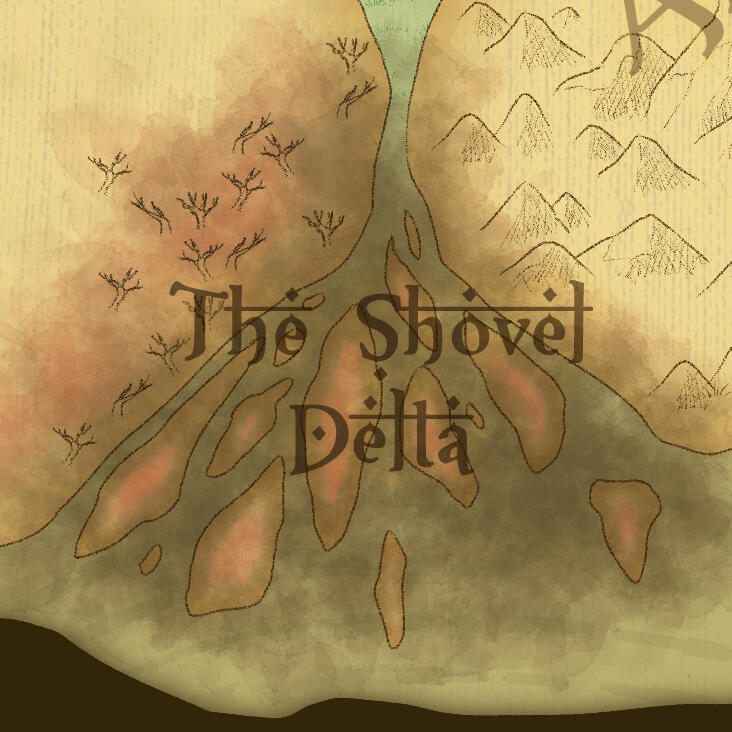
The Shovel Delta is the most well known cursed land, existing for nearly 2000 years. The legend of Faraj Gheet is also the story of the Shovel Delta's curse.The king of the Gheet empire, King Faraj Gheet, allowed a meeting with Queen Nasha Hakim and King Azrat Najat around 2000 years ago. During the meeting, Faraj murdered Nasha and Azrat. Before soldiers could detain him, Faraj revealed his use of dark magic, and escaped. The details following this event are unclear, but it is recorded that a sorcerer was able to defeat him before he could spread his empire any farther. The decades following the Gheet dynasty’s fall were incredibly tumultuous for the sphinx. The Hakim and Najat royal families continued on, forming a strong alliance in the wake of their leaders deaths. The lands the Gheet empire held were considered cursed beyond repair, and its citizens faded into demons. As a whole, the sphinx agreed to close off all travel to the southern shores to keep everyone safe from the cursed land.
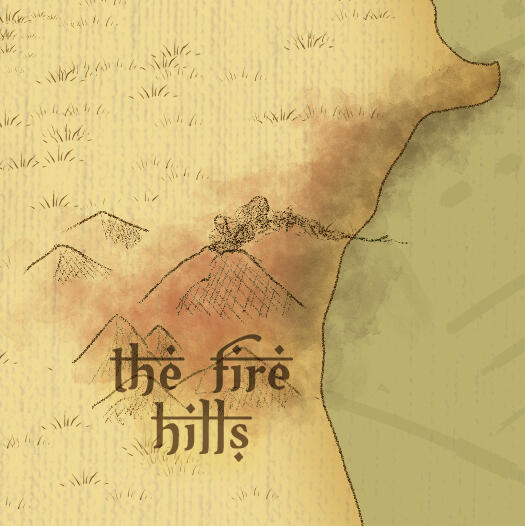
Another well known cursed land is the Fire Hills. This volcanic territory used to be the home of many faun, who perished when these hills exploded with pyroclastic fury. If there were survivors, they were quickly engulfed by the curse that spread over this area in the days following the initial eruption.
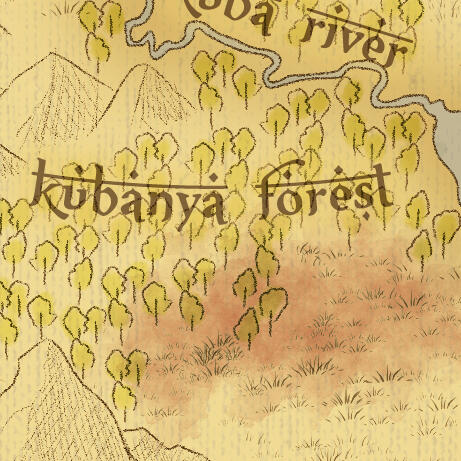
A relatively new but massive cursed land has spread around the southern edge of the Kubanya Forest in faun territory. Some pathways of this area are still navigable, but with great caution. Nobody is sure what caused this area to form, but it has been steadily growing worse over the years.
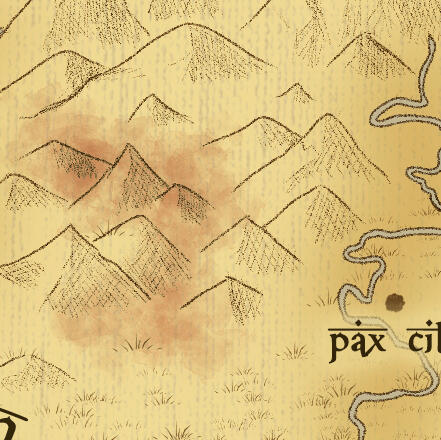
A small valley between Pax City and Wadi Hum has been only recently documented as having cursed soil. Because it is still new, travelers may be able to pass through during the day without much issue.
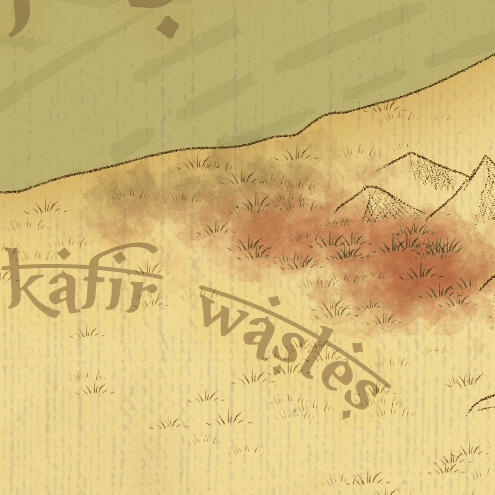
The northern area of the Kafir Wastes is a well documented cursed land. The wastes used to be an area sphinx would banish people to, and as a result carry the weight of much death. This zone showed up soon after the leyline upheaval, but is kept controlled.
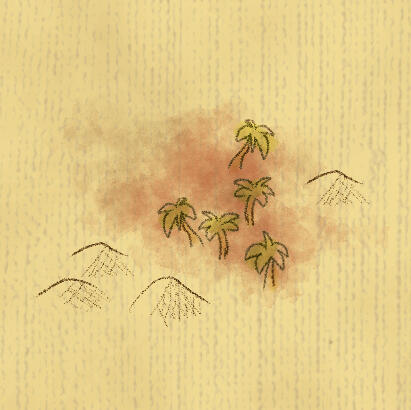
A large area around what used to be an oasis is now a cursed land. It's uncertain what caused this oasis to turn. In historical texts, sphinx have described the oasis as once being very pure and quite beautiful. This oasis was the first cursed land to be properly contained after extensive research.
Demons
The demons of Ayshara come in so many shapes and forms, it's impossible to categorize them. Some are quite small, the size of insects in weak curses. But some can become frenzied monsters, growing in size and strength in deeper curses. The stronger demons can venture outside a cursed land at night, but will disappear during the day if still outside of a curse.
Ezirrim
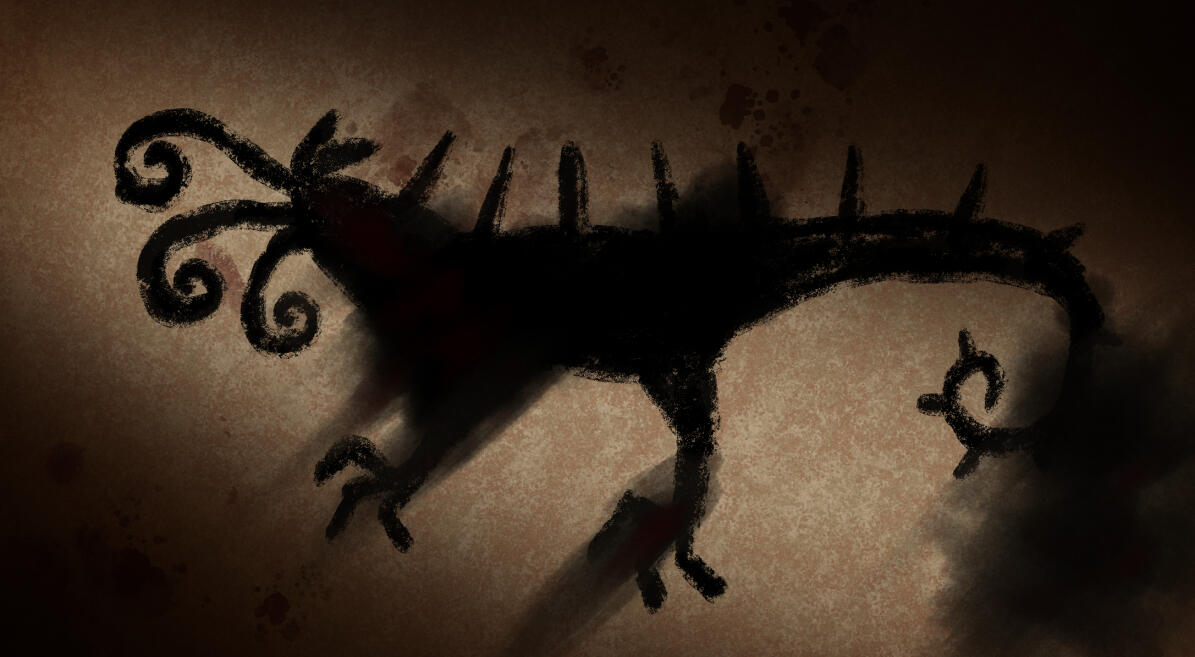
Though all demons have no rhyme or reason to their appearances, there is one that has been consistently described in multiple places, Ezirrim.This beast was first found by the sphinx, as it was first seen at the edge of the Shovel Delta. Ezirrim is said to be a phantom, able to show up in any cursed land. It stands 40 feet tall on all fours, having the body of a wingless black dragon. Where a face should be, only a void filled with writhing tendrils remains. It's body has been seen oozing a black liquid which emits a foul smelling smoke.Ezirrim has gained notoriety across all of Ayshara for being undefeatable. It's been documented to be resistant to magic and dragon fire, but does not venture away from a cursed area like some other strong demons can. It has come to be known as the king of demons.

Magic
The magic use in Ayshara has been expanded upon greatly after the Leyline Upheaval.For the most part, magic deals with the elemental forces of nature, and can be divided into 3 categories of strength; crude, baseline, and advanced.

Crude Magic
Crude magic is the kind that can be used even by some animals. It comes from nature, and is usually performed by asking nature to bend to ones will. It doesn't take any stamina to use, but cannot be performed too often as nature will not always bow to someone's command.• Plant Growth - There is a population of faun who are able to use this magic with hardly any practice. By calling on the nutrients in the soil around a seed, one can make that seed sprout and grow for a short time. This helps in getting nursery plants established faster.
• Illusion - This magic is well known for being the favored magic of unicorns, but people can use it as well. By asking the light around oneself, the user can create an image of almost anything, or become invisible to anyone around them.
• Wind - Crude wind magic can call up a gust of air. It's not strong enough to create major damage, but can be used to caused confusion and trouble.
• Song - Related to wind, song magic requires an instrument. It can be used to lull people to sleep, hypnotize, or summon animals.
• Splash - This simple magic asks a small amount of water to separate itself from a larger body of water.
• Float - Floating magic is known for being incredibly finicky. While it can usually make objects float for a short time, casting it towards a person or on oneself results in failure.
Baseline Magic
When a magic user begins to practice more often and learn how to appease nature, their spells can become more powerful and detailed. Baseline magic still makes use of nature, but offers payment in return. Said payment is usually stamina, but a magic user can also offer their own blood, hair, belongings, or food.• Plant Surge - A stronger variant of the crude plant growth, surge causes plants to grow at a much more rapid pace. The bigger the plant, the higher the personal cost.
• Dreamwalk - This is a branch of illusion magic, and is used to view the dreams of sleeping people. This magic has been known to backfire if used for too long, resulting in the user becoming stuck within an illusion dream for hours.
• Wind - With an offering, wind magic can be strengthened to make a blast of air capable of destruction.
• Song - With offerings, the magic of songs can be used to captivate crowds of people instead of just one at a time.
• Splash - Great waves can be summoned up with offerings to the water. Those who are more skilled can summon water from the air if it is humid enough.
• Float - At higher levels of skill and offerings, floating magic can be used to not just make objects hover, but move around at will.
• Fire - Some would consider fire use to be advanced magic since naturally, fire is wild and mostly untamed. Fire spells can only use fire that already burns.
Advanced Magic
Magic can become incredibly strong when used by someone who has practiced for many years and gives much more of themselves for the sake of it. At this level, magic becomes difficult to categorize, as it begins to combine different aspects of nature to make something new. Beautiful illusion magic can be cast over a stadium to tell stories, fires hot enough to melt metal in forges, entire storms called upon to bring rains to parched land.Dark magic is incredibly advanced, only able to be used by sacrificing something that cannot be returned. Cutting off pieces of one's body such as fingers or entire limbs is typically how dark spells are cast. This magic is used to steal life, cause immense destruction, and spread evil over the land.

Cities of Ayshara
With Ayshara being host to so many races, many cities have been established across the land. Some cities see a larger demographic of one race over another.
Faun Territory
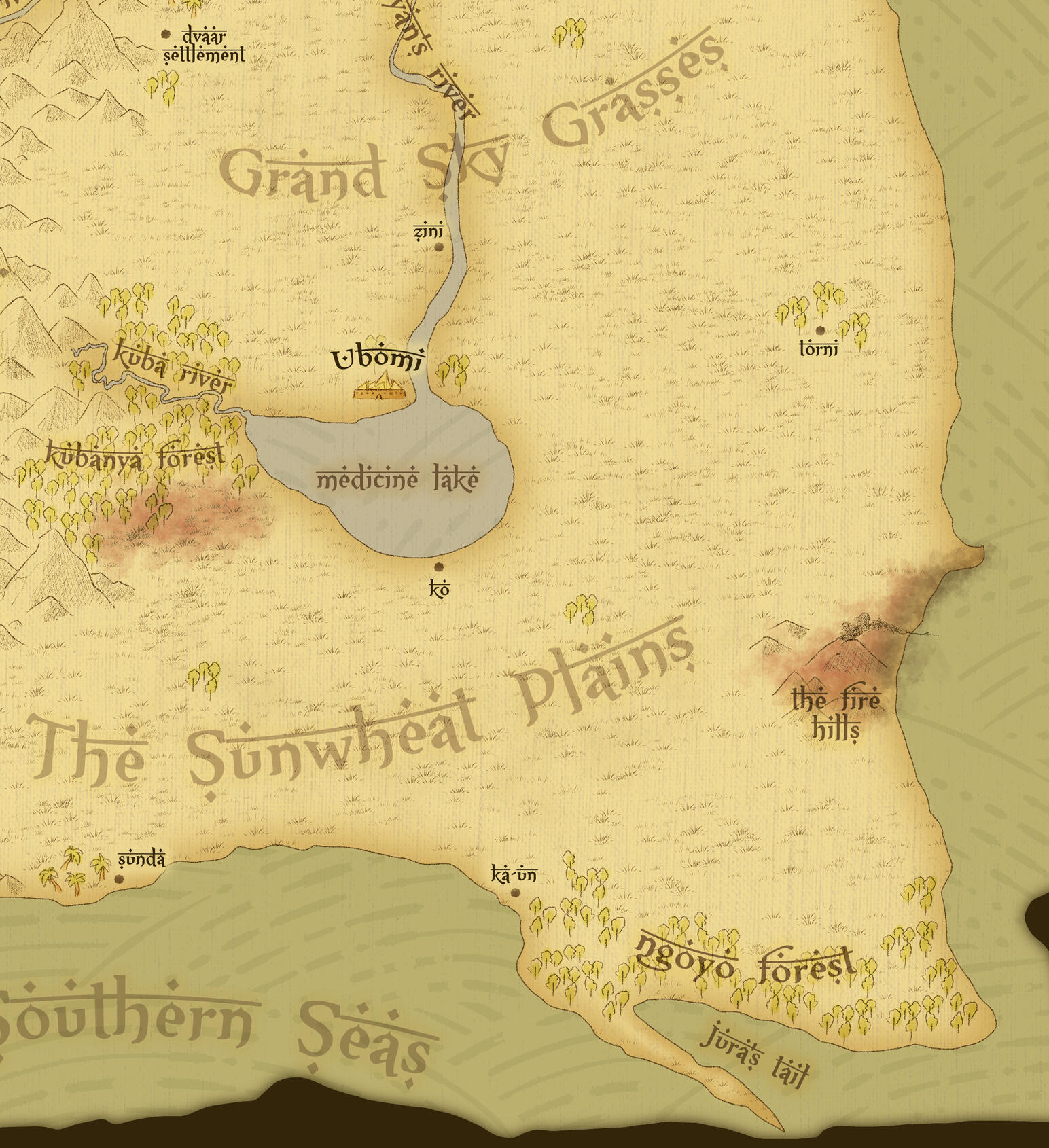
Faun control a large territory of Ayshara. Much of their territory is plains and grassland with few forests. Though it is mostly inhabited by faun, many other races call this region home.• Zini - (Floodplains) To the north of Ubomi on the banks of Varyan’s river, Zini is a decently sized city famed for its unique mead. It is also a vacation destination and has inns and shops on a large waterfront dock.
• Ubomi - (Lifegiver) The Sunwheat faun capital city. Tall spires around the city hold tarps that help to shade the city and its inhabitants from the hot sun. The city is surrounded by clay walls that keep the citizens safe from dangerous beasts. Historically, the city was only inhabited by faun and did not welcome outside races. Over the centuries, the faun have become more relaxed and allow many races in and out of the city.
• Torni - (Golden Hoof, named after an ancient faun god) Torni is a city that rings a depression in the ground. During the rainy season, this depression fills with fresh water. In the dry season, the basin is used as a site of worship and community. While Baruk have villages scattered across the Grand Sky Grasses and Sunwheat Plains, Torni is where the largest concentration of them can be found.
• Ko - (Health giver) Known for its citizens' use of medicinal herbs taken from the shores and waters of Medicine Lake, this small city helps provide tinctures and lifesaving care to many. There is a system of boats that traverse the lake to Ubomi, and up Varyan's River to bring trade goods to and from the area.
• Sunda - (Named after a faun goddess of flowers) Sunda is a small city on the southern shores of the faun territory. It's usually covered in fog for most of the year and is popular for it's fields of beautiful wildflowers.
• Ka-Un - (Journey End) Though it’s not truly the end of a journey, Ka-Un serves as a rest stop for some faun on their pilgrimage to Jura’s Tail. On the southeastern edges of the city there are many gardens that skirt the edges of the Ngoyo forest.
Drake Territory
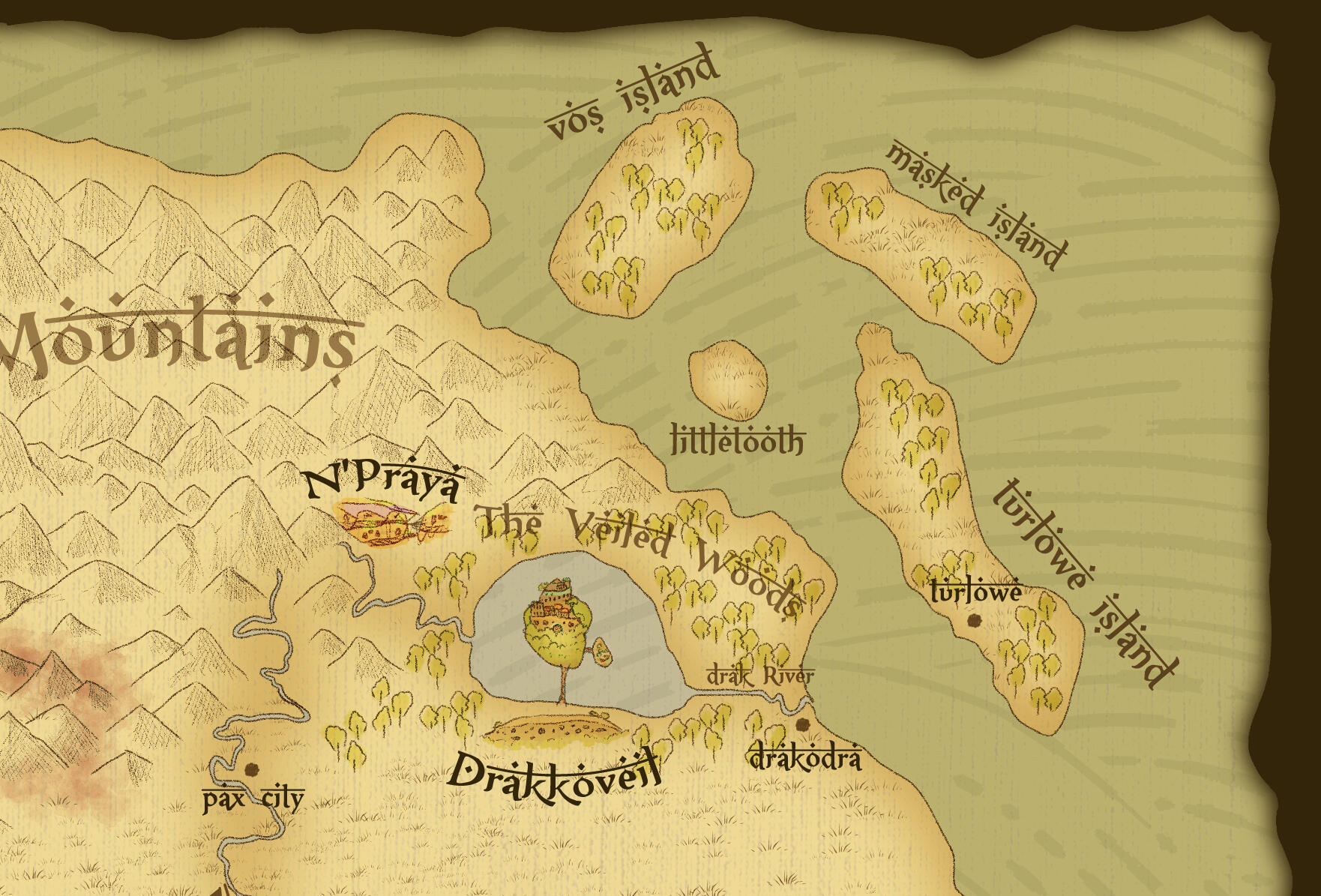
The Drake territory is small, but has historically spread into the desert and grasslands. While several races live in this area, there are no sphinx that live in drake territory.• Turlowe - (Dweller of the Hills) This small city on Turlowe Island serves as a sort of vacation spot for drakes wanting to be in a more open environment. The city is spread out, rather than carved from stone cliffs like in Drakkoveil. The drake refer to it as a quiet place where one can hear themselves think more easily.
• Drakodra - (Carried Serpent) A farming town on the eastern coast of the drake territory. A small community of Takidi have taken up a permanent residence in Drakodra, serving the drakes as negotiators for trade and commerce. Drakodra has a sectioned floating bridge that can be separated and floated aside to allow ships to pass through, then reconnected for foot and cart travel.
• Pax City - (Peace City) Located in a beautiful open plain, Pax City is a place of meditation and reflection. The city is adorned by the fields of flowers surrounding it, as well as the massive waterfall on nearby Varyan’s River that can be seen from most spots within the city.
• N'Praya - (Last City) After tragedies that decimated the dhyr population, N’Praya is the only remaining settlement for the dhyr. It is located within a valley in the foothills of the Gahl Mountains. Several walkways and bridges connect both side of the village over the Drak river. The population is almost entirely dhyr, with a few scholars living there either permanently or seasonally.
Sphinx Territory
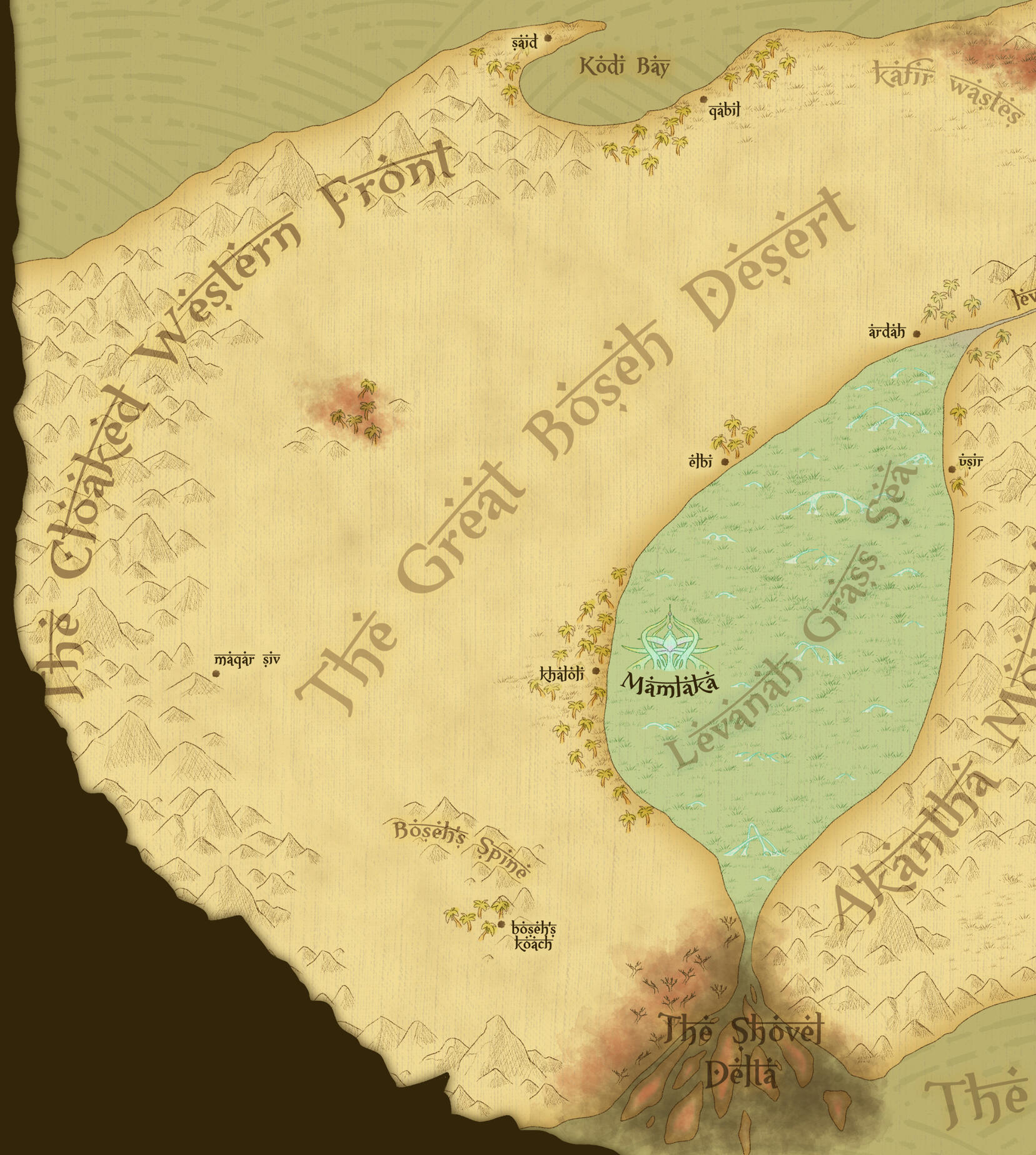
Sphinx control the entire desert, as well as the inland Levanah sea. While several races live in this area, there are no drakes that live in sphinx territory.• Said - (Named after an ancient king) A popular beachside city. Said is one of the oldest settlements in Sphinx territory, and is connected to both the Kodi Bay and Northern Sea. "The sun rises and sinks in the sea at Said." is a popular saying about the city having two coastlines for optimal sunrises and sunsets.
• Qabil - (Named after an ancient king) A popular destination for travelers, explorers, and even retirees. The beachside city is small, but large enough to support a thriving population. Orchards of date palms and other fruit trees are found on the outskirts.
• Ardah - (Named after a Sphinx god) Settled on the transition between the Levanah River and the Grass Sea. Ardah is famed for the incredible waterfall where the river technically ends. While not tall (Only about 10 feet at the tallest point) it is very long, stretching the entire length of the river. The city is well known for it's uniquely flavored sugar cane, which is grown on the edges of the Levanah River.
• Elbi - (Sphinx language, "My Love, My Life) This is city is known for being a 'romantic' setting because of it's origins. As the story goes, a princess from Khaloli fell in love with a soldier from Ardah while traveling. Once a year, they would meet at the oasis halfway between their kingdoms. Eventually the two eloped, and started a new city at the oasis together. Elbi is now known for it's beautiful views of the Levanah Grass Sea and it's crystal arches.
• Usir - (Named after an ancient king) The city was named after Usir Hakim, a lesser known king. A large coal mine sits at the border between the city and the beginning of the Akantha Mountains.
• Maqar Siv - (Siv’s Rest) Being the only large city to the west of the desert, Maqar Siv serves as an important location for expeditions into The Cloaked Western Front. It's generally regarded as a military outpost, with some civilian homes and businesses. Many attempts have been made to create a road between Maqar Siv and Khaloli, but the winds of the The Great Boseh Desert constantly push shifting sand over any construction. There is a small group of Takiki that have taken up permanent residence in this town, and act as guides to the safer zones within the Western Front.
• Khaloli - (Companion) Located in one of the few forests in the desert at the western edge of the Levanah Grass Sea. This city is well known for providing resources like crops and fresh water to the capital city of Mamlaka, as well as other areas of the Sphinx territory. It's mostly a farming city today, but held more political and financial power before the Leyline Upheaval.
• Mamlaka - (Dominion) The capital city of the Sphinx territory. The massive city is settled almost entirely on top of a crystalline structure shaped like a lotus blossom. Smaller crystal lotus blooms can be found all over the Levanah Sea, but there has been no explanation found for why this one grew so large. Mamlaka holds the largest libraries and museums in Sphinx territory. The royal family also lives in the palace built at the center of the structure.
• Boseh's Koach - (Boseh’s Might) This oasis settlement was originally a thieves hideout, and difficult to reach. One must either travel around the north or south of Boseh's Spine, or try to find passage through the mountain range itself. There's been debate on whether the term Koach/Might represents Boseh's throat or groin, as either could be an appropriate meaning. In current times, the settlement is considered dangerous, and only occupied by outlaws. Most Sphinx nobility have no interest in flushing out the location for criminals. It's too easy for people to hide in the mountains dotted with caves, and the location serves no purpose as the ground is mostly infertile and difficult to farm on.
Contested Territory
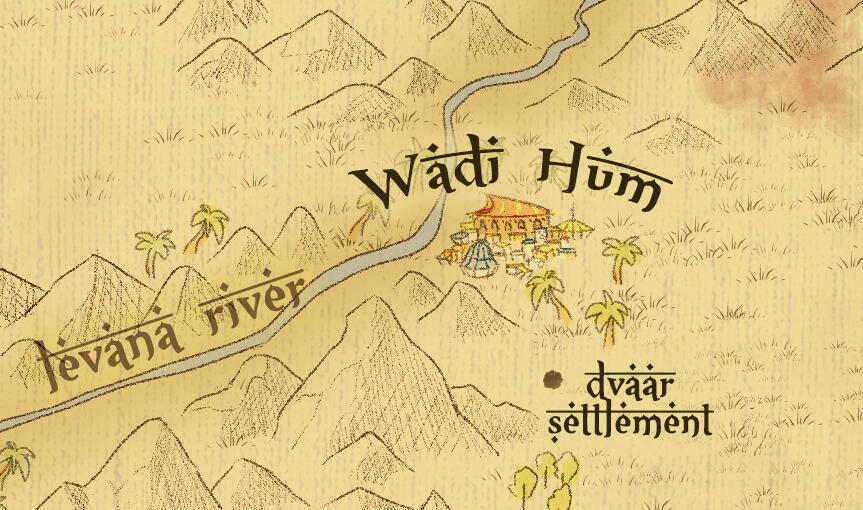
The passage between the Gahl and Akantha Mountains remains a contested zone between the sphinx empire and drake kingdom.• Wadi Hum - (Humming Ravine) Possibly the most famous city in Ayshara, Wadi Hum is the host of the contests between sphinx and drake, which decide who controls the area every 5 years. Because it sits between two powerful kingdoms and is the only passage to and from the desert and plains, it has monumental strategic value. Wadi Hum is a center for commerce between territories.
• Dvaar Settlement - (Named after a Chanduran god) Though it's technically inside faun territory, the Dvaar Settlement is considered to be contested territory like Wadi Hum. There is a smaller mountain passage from Dvaar that leads to the Levana river, but no bridge across. Travelers must still venture north to the bridge at Wadi Hum if they want to avoid the busy city. Dvaar is mostly controlled by a senate made of several races, but acts as a capital for the Chandura and other people of the Akantha mountains.